

When Demon Hunters arrived in Legion, they fundamentally reshaped expectations around mobility, pacing, and the very rhythm of combat in WoW. Prior to their introduction, classes relied heavily on cooldowns, cast times, and limited bursts of movement to navigate encounters. Demon Hunters broke these conventions wide open. Their design prioritized speed, fluidity, and constant motion—traits that changed how players perceive melee combat forever.
This article explores how Demon Hunters redefined class design, influenced encounter mechanics, and left a lasting mark on WoW’s combat philosophy.
The Birth of a Hyper-Mobile Class
Demon Hunters entered the game with an identity built around agility, momentum, and the ability to weave movement into damage. Abilities like Fel Rush, Vengeful Retreat, Glide, and Double Jump introduced mobility unmatched by any previous class. Where older classes felt anchored to the ground or reliant on gaps between casts, Demon Hunters felt liberated. Their combat style rewarded constant repositioning, giving players a sense of speed rarely seen in MMOs.

This mobility didn’t just redefine melee—it redefined expectations across the entire game.
Double Jump and Glide: Small Tools With Massive Impact
Double Jump and Glide may sound simple, but they changed movement philosophy on a fundamental level. With these abilities, Demon Hunters gained a verticality that no other class possessed. They could cross chasms, dodge mechanics, access hidden paths, and create entirely new navigational routes in both open world and instanced content. Glide alone made exploration smoother, safer, and more creative.
These movement tools set a new precedent for traversal that future expansions would expand upon.
The Combat Rhythm: Movement as a Damage Tool
Before Demon Hunters, movement typically meant sacrificing casts, delaying abilities, or creating gaps in rotations. Demon Hunters flipped this relationship. Fel Rush, Vengeful Retreat, and even Throw Glaive synergize with momentum. Damage and movement became inseparable—the faster players moved, the more engaging the rotation felt. Mobility wasn’t a resource to minimize; it was a key component of the class’s performance.
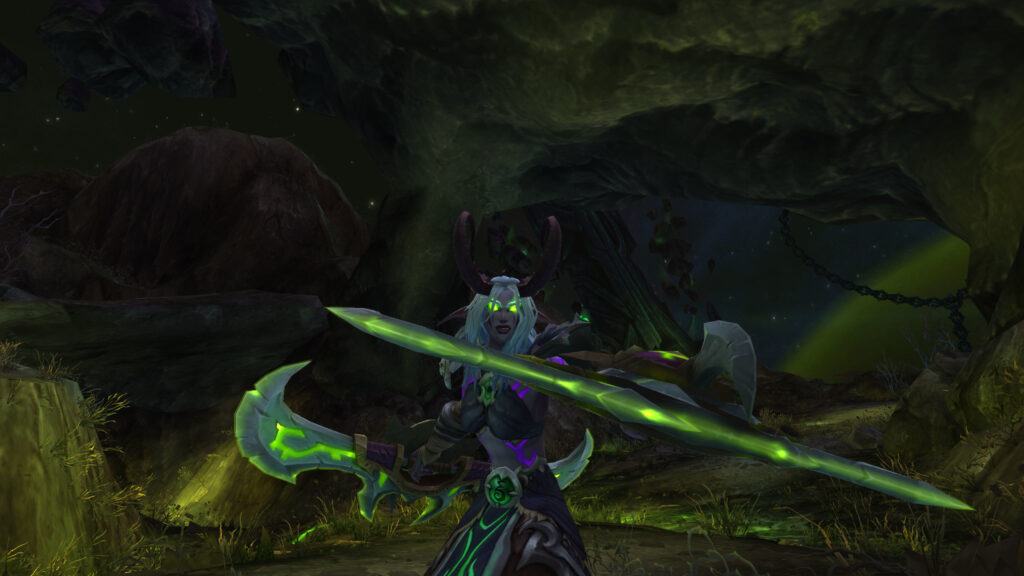
This design philosophy taught the community that movement could be a feature, not a penalty.
- Fel Rush provides both mobility and damage in a single action.
- Blade Dance rewards staying inside enemy hitboxes.
- Vengeful Retreat mixes evasion with resource generation.
- Immolation Aura incentivizes constant enemy engagement.
- Momentum builds turn repositioning into a core part of DPS optimization.
Havoc’s Momentum Playstyle and the Rise of “Active Melee”
The Momentum talent introduced a high-risk, high-reward form of combat that blended speed, positioning, and damage optimization into a seamless experience. Players weren’t just pressing buttons—they were planning flight paths, weaving abilities together mid-movement, and using mobility as a mathematical advantage. This led to a new kind of melee gameplay where movement wasn’t optional but expected.
Havoc became the poster child for aggressive, dynamic melee design.
Vengeance: A Tank Spec Built Around Speed and Control
Demon Hunter tanks also brought a revolution. Vengeance didn’t tank like traditional plate classes. Instead of relying on shields or massive health pools, it used agility, damage spikes, and self-healing as tools for survival. Sigils added strategic AoE control, while Infernal Strike created one of the highest-mobility tank kits ever seen. This created encounters where Demon Hunter tanks could reposition rapidly, kite fluidly, and maintain threat while dancing across the battlefield.
Vengeance introduced a new image of “active defense” that other tank classes soon incorporated.
The Impact on Encounter Design
Demon Hunters’ unmatched mobility forced Blizzard to rethink boss mechanics. Encounters began incorporating movement-heavy challenges, chase sequences, and mechanics that rewarded fast repositioning. Designers could expect at least some players to have rapid dash tools, changing how they created spacing challenges. Zones and dungeons also evolved—platform layouts, cliff geometry, and vertical traversal became more prevalent.
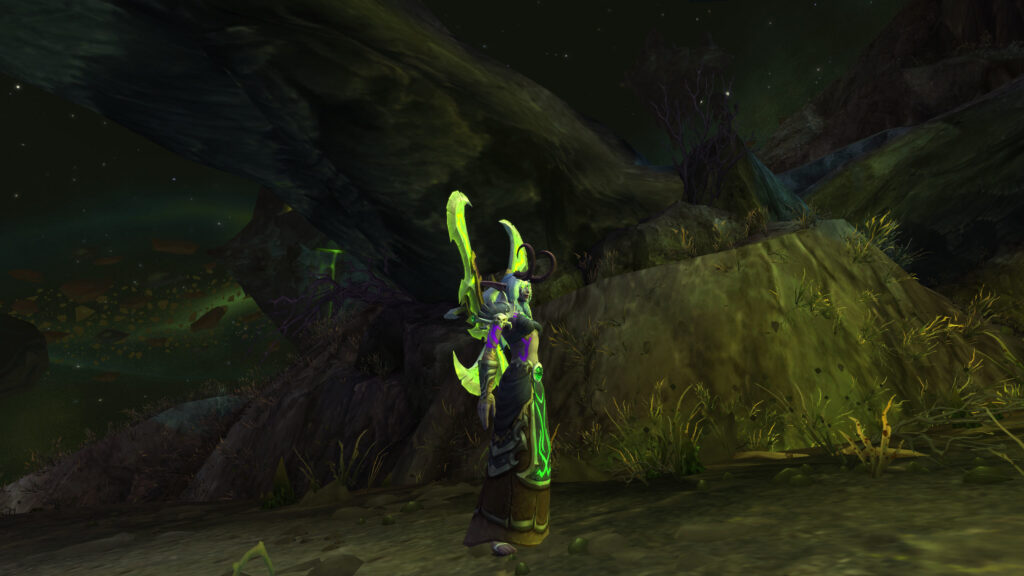
The class didn’t just fit into the game. It reshaped the game around it.
How Demon Hunters Influenced PvP Dynamics
In PvP, Demon Hunters disrupted traditional pacing. Their ability to stick to enemies, escape danger, or chase down healers with relentless pressure changed arena strategies. They blurred the lines between melee and ranged roles due to their mobility toolkit. PvP metas adjusted to accommodate their gap closers, snares, and unpredictable movement. Even in battlegrounds, their speed made them natural flag carriers and disruptors.
Demon Hunters became synonymous with hyper-aggressive, high-pressure gameplay.
Animations, Visuals, and the Feeling of Motion
Part of what makes Demon Hunters so satisfying is aesthetic fluidity. Their animations are sharp, fast, and rhythmic. Effects follow the contours of their movement, making combat feel energetic and precise. From the spinning blades of Eye Beam to the graceful arc of Fel Rush, every ability reinforces the fantasy of a class in constant motion. Blizzard used Demon Hunters to demonstrate how animation polish enhances mechanical clarity.
The result is a combat kit that feels as smooth as it looks.
Legacy and Influence on Modern Class Design
Since Legion, other classes have gradually absorbed elements inspired by Demon Hunters. More movement abilities entered rotations. Encounters reward agility and fast reactions. Animations became more fluid. WoW moved closer to an action-RPG feel without sacrificing its MMO identity. Demon Hunters were the turning point—a modern class built for modern gameplay expectations.
Their arrival marked the beginning of a new era of responsiveness and fluid combat.
Conclusion
Demon Hunters revolutionized WoW because they redefined what combat could feel like. They merged movement and damage, speed and rhythm, style and mechanical depth. They pushed encounter design forward, raised player expectations, and set a standard for agility-based gameplay that future classes continue to follow. Whether soaring through the air with Glide or weaving between enemies with Fel Rush, Demon Hunters embody fluidity in its purest form—and Azeroth has never been the same since.
They didn’t just join the roster of classes. They reshaped the game’s identity.